
The colour of tomato paste is one of the most important quality indicators in global trade, factory inspections, customs checks, and customer purchasing decisions. The industry widely uses the USDA Tomato Paste Color Standards, supported by HunterLab L*a*b* measurements, Bostwick viscosity, and visual evaluation methods.
1. The Most Common Tomato Paste Colour Standards
(1) USDA Tomato Paste Color Grades
The most widely accepted global colour grading system.
There are 3 main grades:
| Grade | Name | Description |
|---|---|---|
| Grade A | U.S. Fancy | Brightest red, highest quality; used by premium food manufacturers |
| Grade B | U.S. Extra Standard | Medium red; widely used for industrial applications |
| Grade C | U.S. Standard | Darker or slightly brownish; for sauces and economy markets |
(2) HunterLab L*a*b* Color Values
Commonly used in factories and by third-party labs (SGS, CCIC, Intertek).
- a*: redness (higher = redder)
- b*: yellowness
- L*: brightness
- a/b ratio: key measure of colour intensity
Typical requirements for 28–30% and 36–38% industrial tomato paste:
- a* > 28 – 32+
- L* = 23–30
- a/b ratio ≥ 1.90 – 2.20
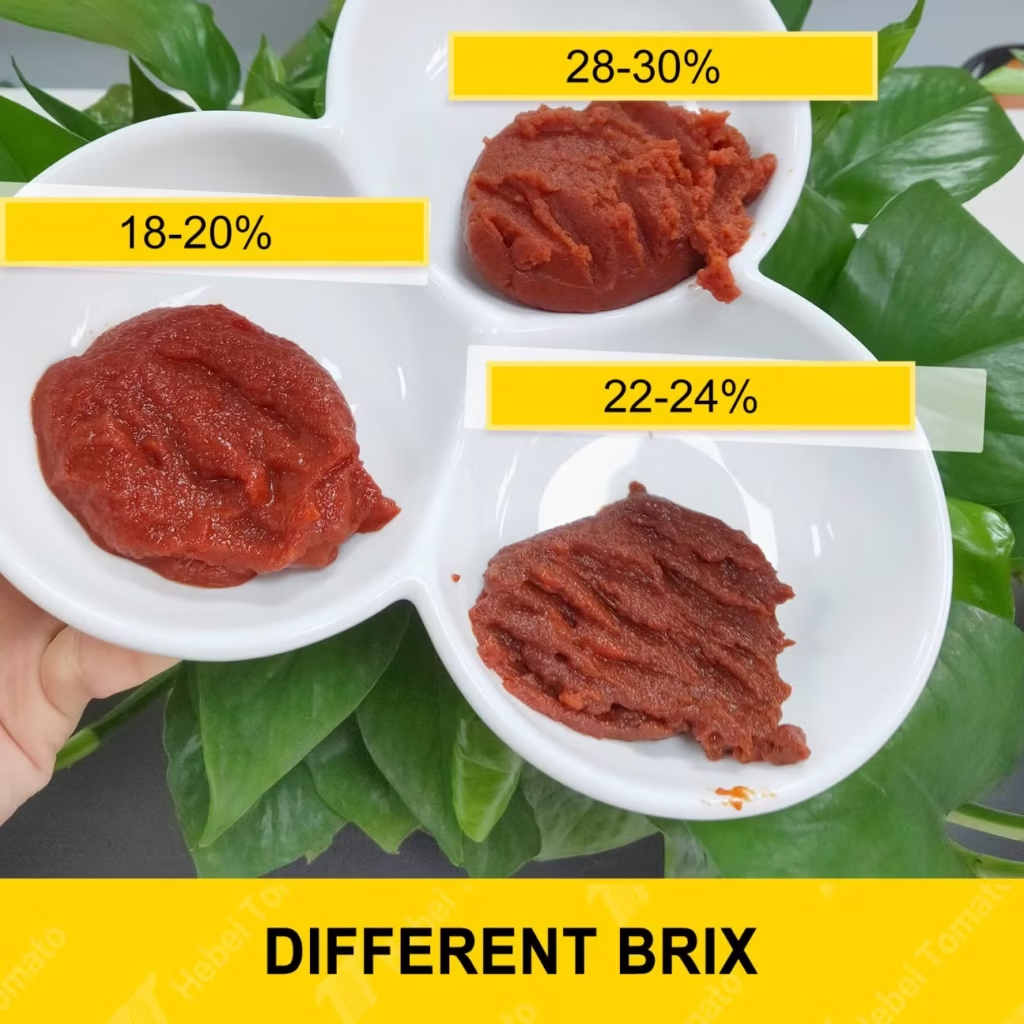
(3) Visual Colour Evaluation
Visual evaluation is still widely used with a standardized light box.
Key judging points:
- Colour uniformity
- Presence of brown tones (overheating or oxidation)
- Orange tones (immature tomatoes or specific variety traits)
2. Typical Colour Ranges by Product Type
| Product Type | Typical a* Range | Characteristics |
|---|---|---|
| Hot Break 28–30% | 26–30 | Bright red, widely accepted |
| Cold Break 28–30% | 24–28 | Slightly orange, stronger aroma |
| Hot Break 30–32% | 28–34 | Deep red; preferred by premium clients |
| Cold Break 36–38% | 26–30 | Medium red; economical option |
3. Why Buyers Care About Colour Standards
Colour has a major influence on:
- Final product appearance (ketchup, sauces, juices)
- Colour stability over shelf life
- Consumer acceptability
- Raw tomato maturity indication
- Determining Hot Break vs Cold Break processing
4. Colour Characteristics by Origin
| Origin | Colour Features |
|---|---|
| Xinjiang, China | Very high a*, bright red, stable colour |
| California, USA | Deep red, highly consistent |
| Turkey | More orange-red; competitive pricing |
| Iran / Chile | Medium red; high cost-performance |
5. Common Reasons for Colour Deviation
- Immature tomatoes
- Insufficient Hot Break temperature
- Overheating (browning)
- Excessive oxidation during long transport
- High dilution / low Brix
- Poor storage conditions (heat or sunlight)
📣 Ready to Source High-Colour Tomato Paste?
If you are looking for stable colour, consistent a/b values, and reliable supply, we export tomato paste to over 20+ global markets, including the Middle East, Africa, South America, and Canada.
Get accurate HunterLab reports, colour samples, and competitive pricing for 28–30% and 36–38% Brix tomato paste.
👉 Contact Us for Samples & Prices
📩 Talk to Our Export Specialist Today

 English
  Russian
  Arabic
  French
  Turkish
  Urdu
Urdu  Vietnamese
  Thai
Thai  Tagalog