

Proper storage of tomato paste is critical to maintaining product quality, flavor, and safety—especially for foodservice and industrial applications. Depending on how tomato paste is stored—at room temperature, refrigerated, or frozen—the shelf life and quality can vary significantly. This guide provides clear instructions for each storage method and explains how color, flavor, and texture may change over time.
1. Room Temperature Storage (Kitchen or Pantry)
Canned tomato paste can be safely stored at room temperature if unopened and kept under proper conditions.
Recommended Storage Conditions:
- Cool, dry, and dark location (ideally below 25°C / 77°F)
- Avoid direct sunlight, heat sources, or high humidity
- Do not store near stoves, ovens, or industrial heat zones
Shelf Life:
- Unopened cans: 24–36 months from production
- Quality is typically stable for this period when conditions are met
Quality Changes Over Time (Room Temperature):
- Color: Slight deepening of red over long-term storage, generally stable within recommended shelf life
- Flavor: Minimal changes initially; very prolonged storage may slightly reduce freshness
- Texture: Remains thick and smooth in unopened cans
⚠️ Once the can is opened, room temperature storage is not recommended—spoilage can occur within hours due to air exposure.
2. Refrigeration (Short-Term Storage After Opening)
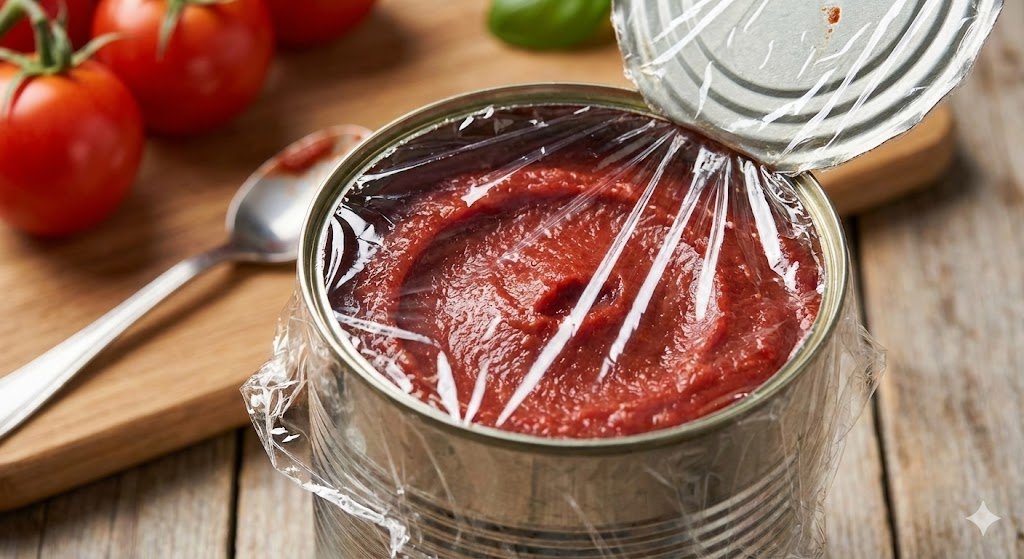
Refrigeration is the preferred short-term storage method for opened tomato paste.
Recommended Conditions:
- Store in an airtight container (glass or BPA-free plastic)
- Refrigerate at or below 4°C / 39°F
- Label with the opening date
Shelf Life:
- Opened tomato paste: 5–7 days
- Maintain a tightly sealed container to prevent moisture absorption or off-flavors
Quality Changes in Refrigeration:
- Color: Remains vibrant for the first few days; minor darkening may occur after 5–7 days
- Flavor: Slight oxidation may develop if exposed to air, but generally stable
- Texture: Thick consistency maintained, but paste may dry slightly on the surface if not sealed properly
3. Freezing (Long-Term Storage)
Freezing is the most effective method to extend shelf life and minimize waste.
Freezing Instructions:
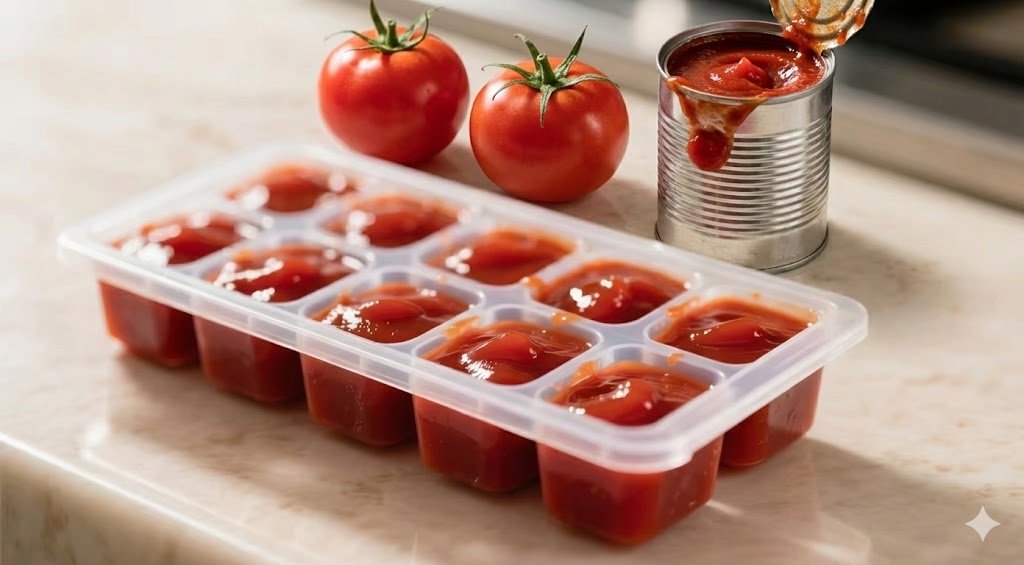
- Spoon tomato paste into an ice cube tray for portion control
- Once frozen, transfer cubes into a freezer-safe zip bag
- Label with the date
Shelf Life in Freezer:
- Frozen tomato paste: Up to 3–6 months for optimal quality
- Quality remains safe beyond this, but flavor and color may gradually decline over very long storage
Quality Changes in Freezing:
- Color: Generally stable; slight darkening possible over months
- Flavor: Well preserved if stored airtight; minor oxidation if exposed to air
- Texture: Maintains consistency once thawed; best to use thawed paste immediately
4. Recommended Method to Maximize Shelf Life
For both foodservice and industrial applications, the most effective way to extend tomato paste shelf life is:
- Freeze in ice cube trays immediately after opening
- Transfer to airtight freezer-safe bags
- Label and use within 3–6 months
Benefits:
- Prevents spoilage and waste
- Preserves flavor, color, and texture
- Allows portion control for cooking or production batches
5. Summary Table of Tomato Paste Storage and Quality
| Storage Method | Typical Shelf Life | Color Changes | Flavor Changes | Texture |
|---|---|---|---|---|
| Room Temperature (Unopened) | 24–36 months | Slight deepening | Minimal | Stable |
| Refrigerator (Opened) | 5–7 days | Minor darkening | Slight oxidation | Slight surface drying |
| Freezer (Opened) | 3–6 months | Mostly stable | Well preserved | Maintains consistency |
Following these best practices ensures maximum shelf life and quality retention for tomato paste in all forms.
✅ Key Takeaways
- Unopened cans: Keep cool, dry, dark → 24–36 months
- Opened cans (short-term): Refrigerate → 5–7 days
- Opened cans (long-term): Freeze in portions → 3–6 months
- Freezing in ice cube trays is highly recommended for both quality preservation and convenient usage.

 English
  Russian
  Arabic
  French
  Turkish
  Urdu
Urdu  Vietnamese
  Thai
Thai  Tagalog